When somebody tells me they have roughly $50,000 to $75,000 for a new pool, the first thing I do is separate the “must-haves” from the features that can quickly push the project over budget.
In my current East Texas / North Texas field experience, that budget usually points toward one of three paths: a small basic pool, a spool, or an owner-builder/DIY approach. The exact answer depends heavily on access, soil/site conditions, materials, equipment and features.
Option 1: a small, basic pool
A basic pool without a separate spa, elaborate automation or multiple water features can sometimes fit this range. As a rough field example, I might think about a pool around 16 × 32 feet and around $60,000, but that is not a quote or guaranteed size-for-price formula.
Option 2: a spool
A “spool” is a pool/spa hybrid — bigger than a traditional hot tub but smaller and more compact than many full-size pools. For a $50,000–$75,000 budget, a spool can sometimes provide more of the experience a homeowner wants than stripping every feature out of a larger pool. A rough size I might discuss is around 15 × 30 feet, depending on the project.
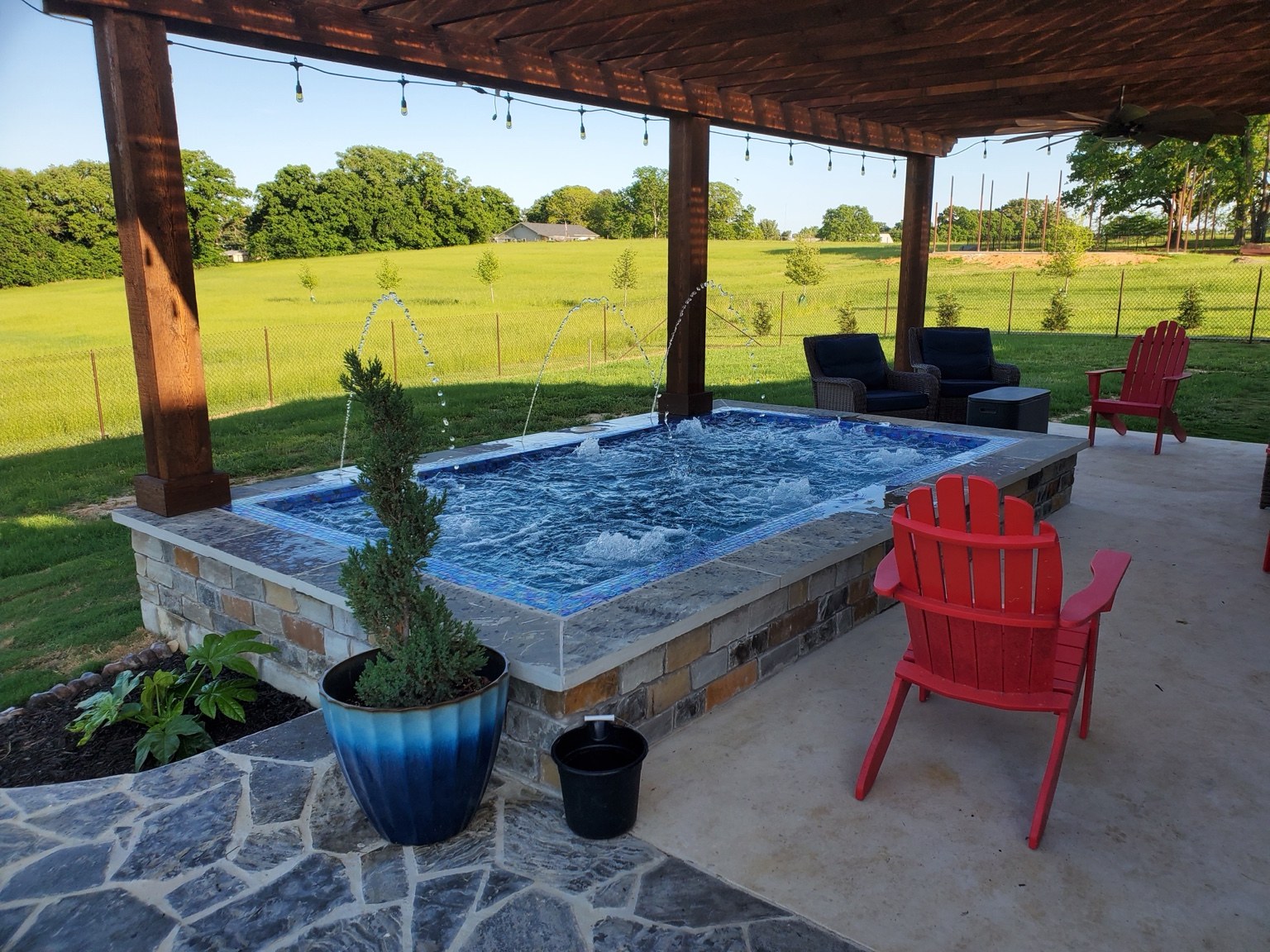
Why a separate spa changes the budget
Once you add a second body of water, heater, automation, water features, upgraded materials or difficult access, the project can move beyond $75,000 quickly and can push past $100,000. That is why I would rather talk through the priorities early instead of designing something that does not match the budget.
Can a heat-pump/chiller turn a small pool into a hot tub?
I would not design around that assumption. I see heat-pump/chiller systems primarily as season extenders: they can help warm spring/fall water and cool overheated summer water, but they are not the same thing as a dedicated spa-heating setup in cold winter weather.
Option 3: owner-builder / DIY
A homeowner willing to act as the owner-builder can potentially save money by hiring and coordinating subcontractors directly. My rough field estimate is that a well-managed owner-builder project could save around 20–30% compared with a fully contracted build. That savings comes with real responsibility: sequencing trades, permits, inspections, scheduling, materials, payments and quality control.
Do not forget the cost of the “extras” later
Some features that look inexpensive on a proposal become recurring replacement costs. In my experience, LED pool lights often become an issue around the three-year mark. Many of the lights I see are sold with warranty periods around that range, and I joke that I see them fail at “three years and two months.” Warranty terms vary by brand and model. A replacement LED light can be around $600 each before installation in my current field experience.
I also see smaller water-feature parts wear out. Rubber bubbler tubes, for example, can crack after a few years and need replacement. That does not mean you should skip the features you want. It means you should understand that equipment and water-feature components do not necessarily last as long as the pool shell.
Every price, size and percentage above is Matt's current field-planning estimate, not a fixed market price or quote. Access, location, materials, soil, engineering, equipment, permitting and design can materially change the cost.
Trying to fit a pool to a real budget?
Matt can help identify where to spend, where to simplify and when a spool or owner-builder approach may make more sense.
Talk About Your Project