I have worked in pool construction since 2001 and have been personally involved with well over 500 pools. One of the most common questions I get from homeowners is whether an older-looking pool really needs to be resurfaced.
I do not think age by itself answers that question. I want to know what the surface feels like, what it looks like, whether material is deteriorating or separating, whether there are cracks, and what is actually happening underneath what we can see.
A pool may be ready for resurfacing when the existing finish has become persistently rough, badly stained or discolored, deteriorated, pitted, flaking, hollow or delaminated, or when repairs to the existing surface no longer make sense. But a stain, a crack or a rough spot does not automatically mean the whole pool needs a new finish. The cause matters.
1. The surface has become rough or uncomfortable
Roughness is one of the first things homeowners notice. I have seen plaster surfaces in North Texas become noticeably rough as they age. Sometimes scale has accumulated on top of the finish. Other times the cementitious surface itself has etched or deteriorated. Those are different problems, even though both can feel rough under your feet.
If swimmers are scraping their feet, swimsuits are catching on the surface, or the finish feels dramatically different from when it was newer, it is worth having the surface evaluated. The correct treatment depends on whether you are dealing with buildup on the surface or deterioration of the surface itself.
2. Staining or discoloration no longer cleans up
Not every stain calls for resurfacing. Metals, organic material, scale and water chemistry can all affect how a pool looks, and some discoloration can be treated without replacing the finish.
When I look at an older plaster pool, I am paying attention to whether discoloration is mostly cosmetic or whether it is happening along with roughness and deterioration. If the finish itself is worn out, repeatedly trying to make it look new with aggressive cleaning is not the same thing as restoring the surface.
I am also cautious about treating an acid wash as an automatic answer for an older plaster surface. Acid affects cementitious material. Whether it is appropriate depends on the condition of that particular finish.
3. The finish is pitting, flaking or deteriorating
Visible material loss is more significant than a simple color variation. Pitting, crumbling, flaking or areas where aggregate is being lost can indicate that the finish itself is deteriorating.
Once the existing surface is no longer sound, the renovation plan has to account for that. A new finish should not simply hide weak material underneath it.
ecoFINISH makes this point explicitly for coating renovations: its installation guidance says the coating will not fix bad plaster or a bad substrate, and hollow, crumbling or significantly delaminated areas have to be addressed before installation. That principle is important regardless of which new finish a homeowner ultimately chooses—the condition underneath the finished surface matters.
4. You have hollow or delaminated areas
Delamination means a layer that is supposed to remain bonded has separated from the material beneath it. On a plaster pool, that can create hollow areas even when the top surface does not initially look terrible.
Some delamination is difficult to fully diagnose while the pool is full. Once a pool is drained for renovation, we can inspect the surface much more closely and determine how much material is actually sound. That can change the amount of preparation a job requires.
This is one reason I do not like promising an exact preparation scope from a few photographs. What is visible above the water and what we find once the pool is empty are not always the same thing.
5. There are cracks—but first determine what kind
A crack does not automatically mean “resurface the pool.” A surface crack, a crack through an old finish and a structural crack through the pool shell are not the same problem.
If movement, the shell, drainage, soil conditions or another structural issue is involved, putting a new finish over the crack without addressing the cause can leave the real problem unresolved.
Resurfacing replaces a worn pool surface. It is not a substitute for diagnosing structural movement or a leak. If I think the problem goes beyond the finish, I want that addressed before we spend money making the surface pretty.
6. The pool is losing water
Unexplained water loss deserves investigation, but it does not automatically mean the finish is leaking. Water can be lost through plumbing, fittings, penetrations, cracks or other parts of the pool system.
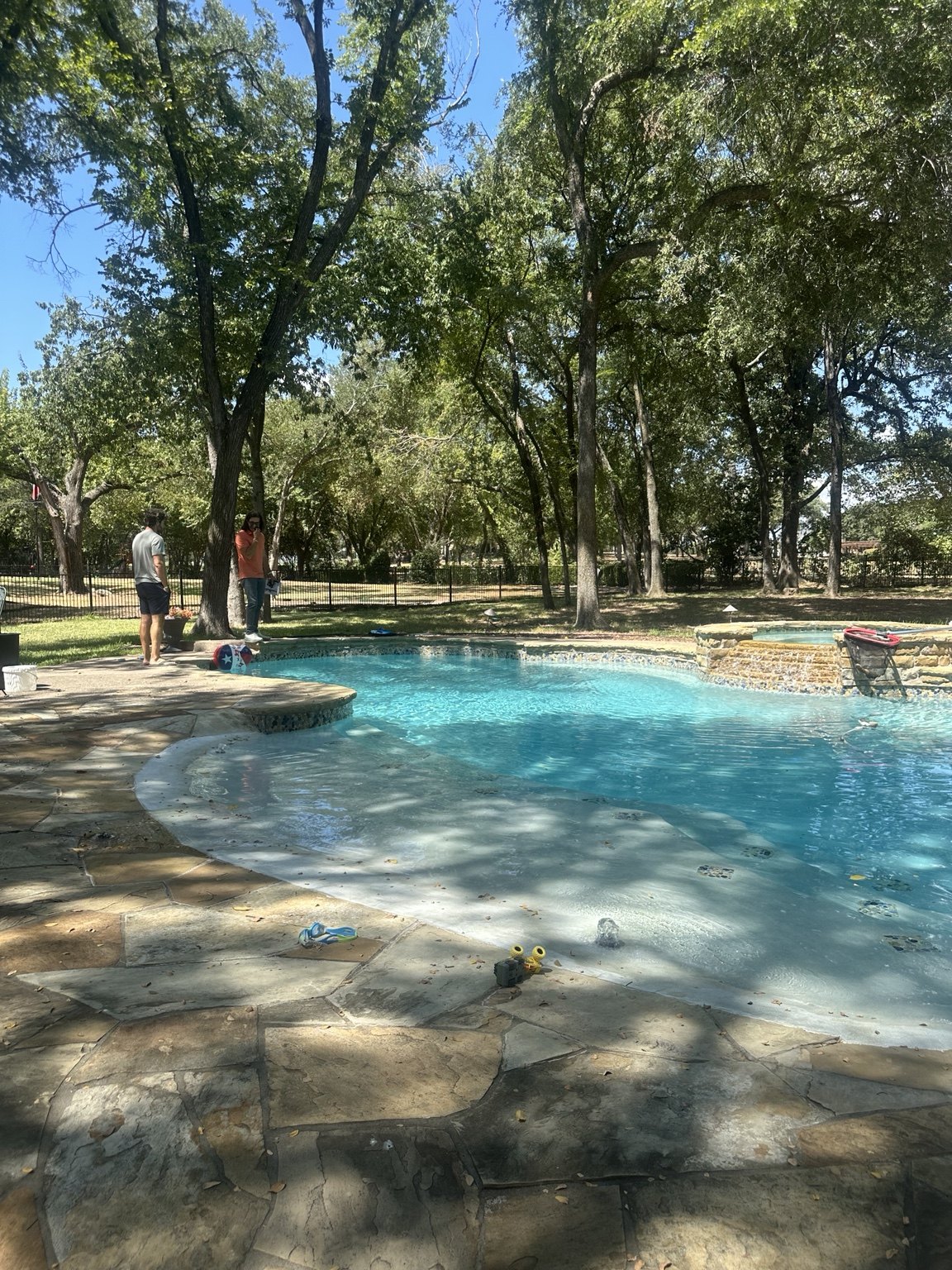
A resurfacing project is a good time to inspect what is visible once the pool is drained, but I would not sell a new finish as a guaranteed cure for a leak without identifying the leak source.
7. Previous resurfacing layers are creating problems
On pools that have been replastered more than once, I look at the history and condition of those existing layers. When I am installing another cement-based finish, I prefer to remove the old plaster and prepare a sound base rather than continue stacking new cementitious finishes over old ones.
EcoFinish is a different system. On a renovation, sound existing substrate can sometimes remain, while hollow or delaminated areas are removed and repaired before the surface is prepared for the coating.
The preparation should match both the condition of the pool and the finish being installed. There is not one demolition rule that makes sense for every resurfacing system.
What does NOT automatically mean you need resurfacing?
- One stain. Diagnose the stain before replacing the finish.
- A little scale. Determine whether the roughness is deposited material or damaged finish.
- One crack. Determine whether it is cosmetic, finish-related or structural.
- Old waterline tile. Tile and the interior pool finish are separate renovation decisions.
- The pool is old. I care more about the condition of the surface and structure than the birthday of the pool.
Can an ugly old pool still be worth saving?
Absolutely. In my experience, the large majority of older pools I am called to look at still have a shell that can be renovated rather than demolished and completely replaced. A pool can look terrible because the finish, tile or equipment is tired while the basic structure is still worth saving.
That is an experience-based observation from the pools I see, not a claim that 95% of every pool in North Texas can be saved. Each pool has to be evaluated individually.
How do I decide between repairing, cleaning and resurfacing?
I would start with three questions:
- What is actually wrong? Is it buildup, staining, deterioration, delamination, a crack, a leak or some combination?
- Is the existing surface sound? A cosmetic problem on a sound finish is different from material that is failing underneath.
- What are you trying to accomplish? If the finish is worn out and you are already investing in repairs, tile or a remodel, resurfacing may make more sense than repeatedly treating symptoms.
Once resurfacing is the right decision, then we can talk about whether plaster, quartz, pebble, polished aggregate, glass or ecoFINISH makes the most sense for the homeowner.
Frequently asked questions
How often should a pool be resurfaced?
I do not recommend resurfacing from a calendar alone. Finish type, installation, water chemistry, maintenance and use all affect condition. I would rather inspect the surface than tell a homeowner that every pool must be resurfaced at a particular age.
Does rough plaster mean I need to replaster?
Not always. Roughness can come from scale deposited on the surface or from deterioration/etching of the finish itself. Diagnose which one you have before deciding on resurfacing.
Do stains mean the plaster is failing?
No. Staining can have several causes. Persistent discoloration combined with pitting, roughness or deterioration is more concerning than color alone.
Can you resurface over old plaster?
The answer depends on the new finish and the condition of the existing substrate. Matt prefers removal of old plaster when installing another cement-based finish. For an ecoFINISH renovation, sound substrate may remain while unsound or delaminated areas are removed, repaired and properly prepared.
Should I resurface before selling my house?
That is an economic decision, not an automatic yes. If you expect to sell soon, Matt recommends weighing the condition of the pool and likely buyer concern against the cost of the project rather than automatically choosing the most expensive finish.
Related Ask Matt guides
Not sure whether your pool actually needs resurfacing?
Aqua Pool Finishes works throughout North Texas and East Texas and installs plaster, quartz, pebble, polished aggregate, glass and ecoFINISH systems. We can look at the condition of the pool and help you separate a surface problem from something that needs a different repair.
Ask About Your PoolSources & methodology
This guide is based primarily on Matt Phillips’ firsthand pool-construction and resurfacing experience. Manufacturer information is separately identified. General ecoFINISH substrate-preparation statements were checked against ecoFINISH’s published installation guidance and homeowner resurfacing information. The article intentionally does not assign a universal resurfacing age because actual condition varies by finish, installation, water chemistry, maintenance and pool history.