One of the first questions homeowners ask me is, “How much is it going to cost to resurface my pool?” I understand why. Before you start comparing colors and materials, you need to know whether you’re talking about a $7,500–$9,500 project or a $20,000 project.
The problem is that two pools that look about the same size from the backyard can require very different amounts of work. The finish matters, but so do the condition of the existing surface, the amount of preparation, the shape of the pool, steps and benches, attached spas, tile, repairs and what we find once the pool is drained.
For a hypothetical 100-perimeter-foot pool, Aqua Pool Finishes’ September 2026 working estimates start around $7,500–$9,500 for white marcite. ecoFINISH is roughly $14,500–$17,500; JewelScapes/glass bead roughly $15,500–$19,000; and Hydrazzo/polished aggregate roughly $17,000–$21,000. Quartz is roughly $10,000–$12,500 and mini pebble roughly $12,500–$15,500 in the same example. Those numbers are planning estimates—not a quote—and preparation, repairs, tile and project conditions can change the total.
Aqua Pool Finishes’ 2026 example resurfacing costs
To make the numbers useful, I’m using the same hypothetical pool for each finish: approximately 100 perimeter feet. This is not an “average DFW pool” and it is not a promise that your pool will cost this amount. It is a consistent example that lets you see how finish choice changes the price.
| Finish | Approx. 100-LF planning range |
|---|---|
| White marcite | $7,500–$9,500 + hydro-prep when required |
| Quartz | $10,000–$12,500 + hydro-prep when required |
| Mini pebble | $12,500–$15,500 + hydro-prep when required |
| ecoFINISH aquaBRIGHT | $14,500–$17,500 |
| JewelScapes / glass bead | $15,500–$19,000 + hydro-prep when required |
| Hydrazzo / polished aggregate | $17,000–$21,000 + hydro-prep when required |
ecoFINISH is a premium finish, but it does not automatically mean the highest total renovation price. On a suitable existing plaster pool, Aqua Pool Finishes can repair hollow, loose, cracked or otherwise unsound areas and prepare the sound remaining plaster for the coating instead of automatically removing every square foot of old plaster. If another cementitious refinish would require whole-pool hydro-prep, avoiding that complete removal step can potentially save thousands and make ecoFINISH competitive with—or sometimes less expensive than—a lower-priced finish once total prep is included.
*These are Aqua Pool Finishes working estimates as of September 2026 for a hypothetical 100-perimeter-foot pool. They are not universal Dallas–Fort Worth market prices, advertised fixed prices or guaranteed quotes. Glass finishes are also available, but we are not publishing an example glass price until the exact product and scope are established.
Current 2026 DFW pool-company cost guides publish wide—and sometimes conflicting—resurfacing ranges. Several place standard resurfacing broadly from the mid-thousands into the high teens or above, with plaster toward the lower end and premium aggregate finishes higher. The ranges vary because companies use different pool sizes, scopes and inclusions. That is exactly why I think homeowners should compare the actual scope of each bid instead of comparing one headline number.
What changes the price of pool resurfacing?
1. The size and geometry of the pool
A larger interior surface requires more material and labor. But gallons alone don’t tell the whole story. Steps, benches, tanning ledges, curves and an attached spa add surface area and detail work.
2. The finish you choose
White marcite, quartz, pebble, polished aggregate, glass and EcoFinish are different systems with different material and application costs. I don’t think the most expensive finish is automatically the right finish. The right choice depends on your budget, how long you plan to own the home, the feel and look you want, and what you expect from the surface.
3. What is already on the pool
This is a big one. If we’re installing a new cement-based finish, I generally prefer removing the old plaster rather than repeatedly stacking new plaster over old layers. If we’re applying EcoFinish, the approach is different: sound existing material may remain while hollow or delaminated areas are removed and repaired before the surface is prepared for the coating system.
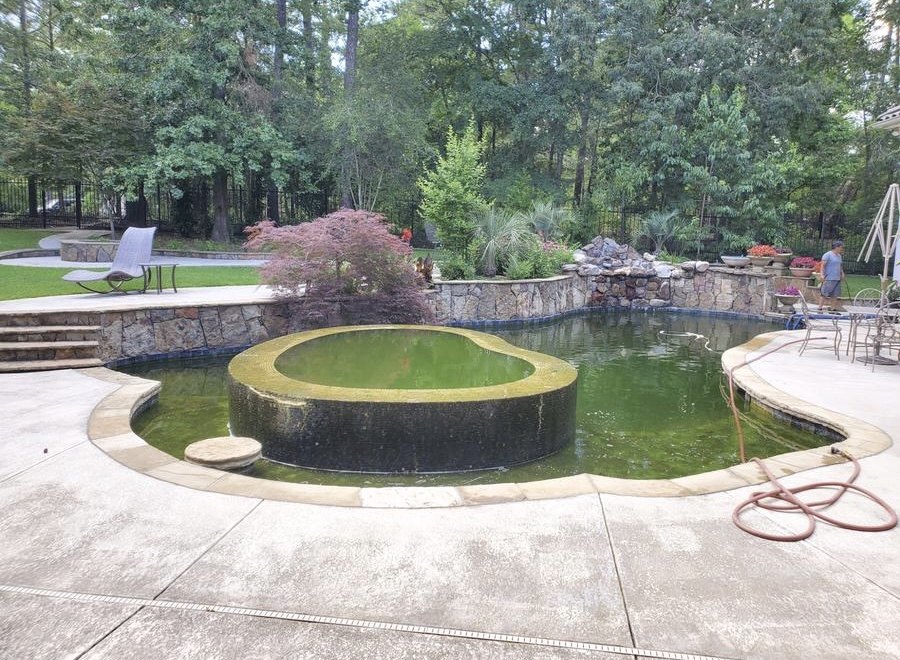
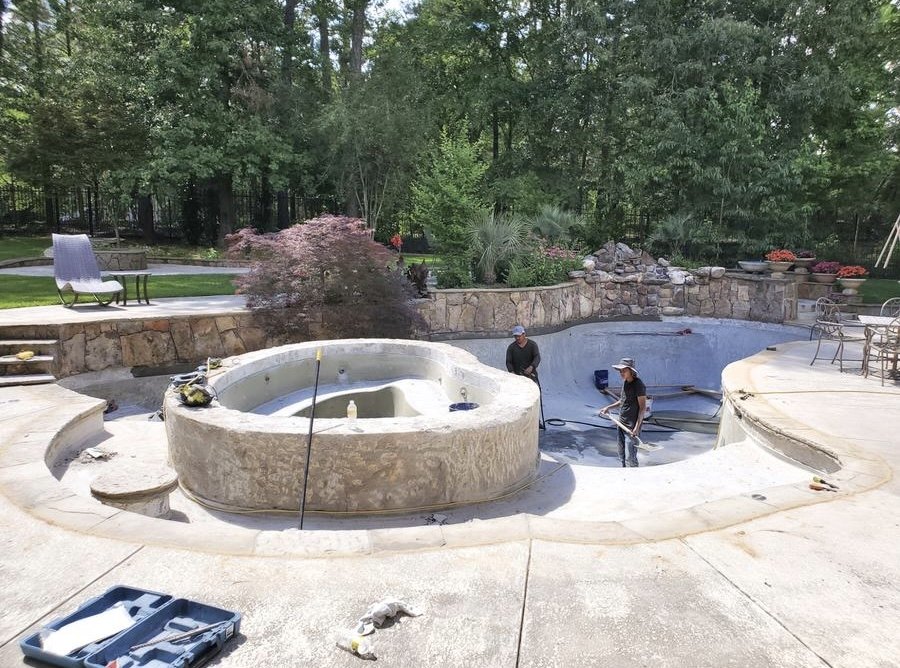
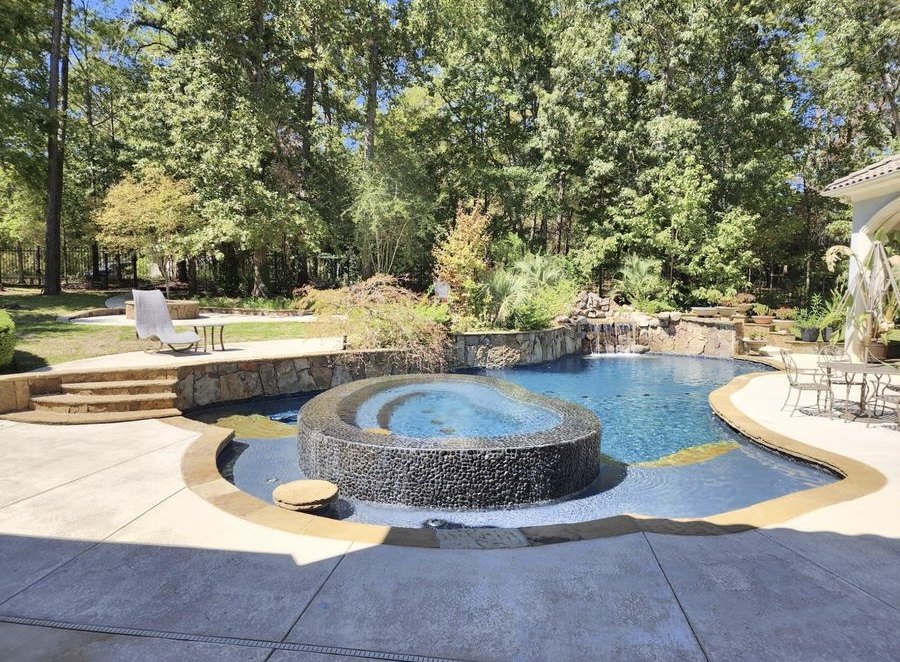
A pool can look like it only needs a new color until it is drained. Once the water is out, we can better evaluate hollow areas, delamination, cracks and previous repairs. I would rather explain that possibility before the job than pretend every resurfacing project is identical.
4. Cracks and other repairs
A cosmetic surface issue and a structural problem are not the same thing. If the pool has cracks, unexplained water loss, damaged fittings or other problems, those need to be evaluated. Resurfacing should not be used to hide a problem that needs a different repair.
5. Waterline tile and other renovation work
You do not automatically have to replace waterline tile every time you resurface a pool. If the tile is sound and you like it, keeping it may make sense. If it is loose, damaged, badly dated or you already want to change it, resurfacing is a logical time to price that work because the pool is already being renovated.
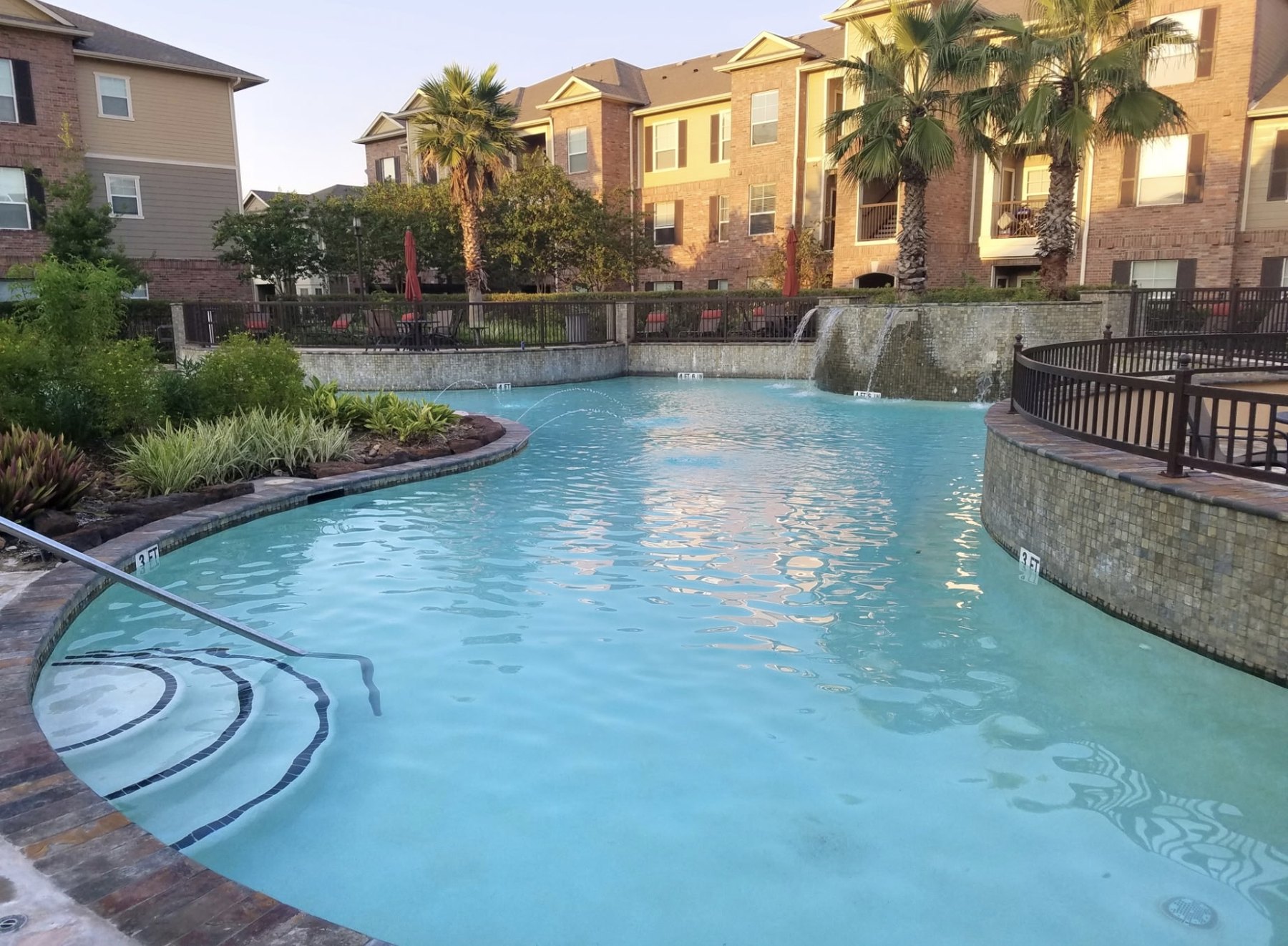
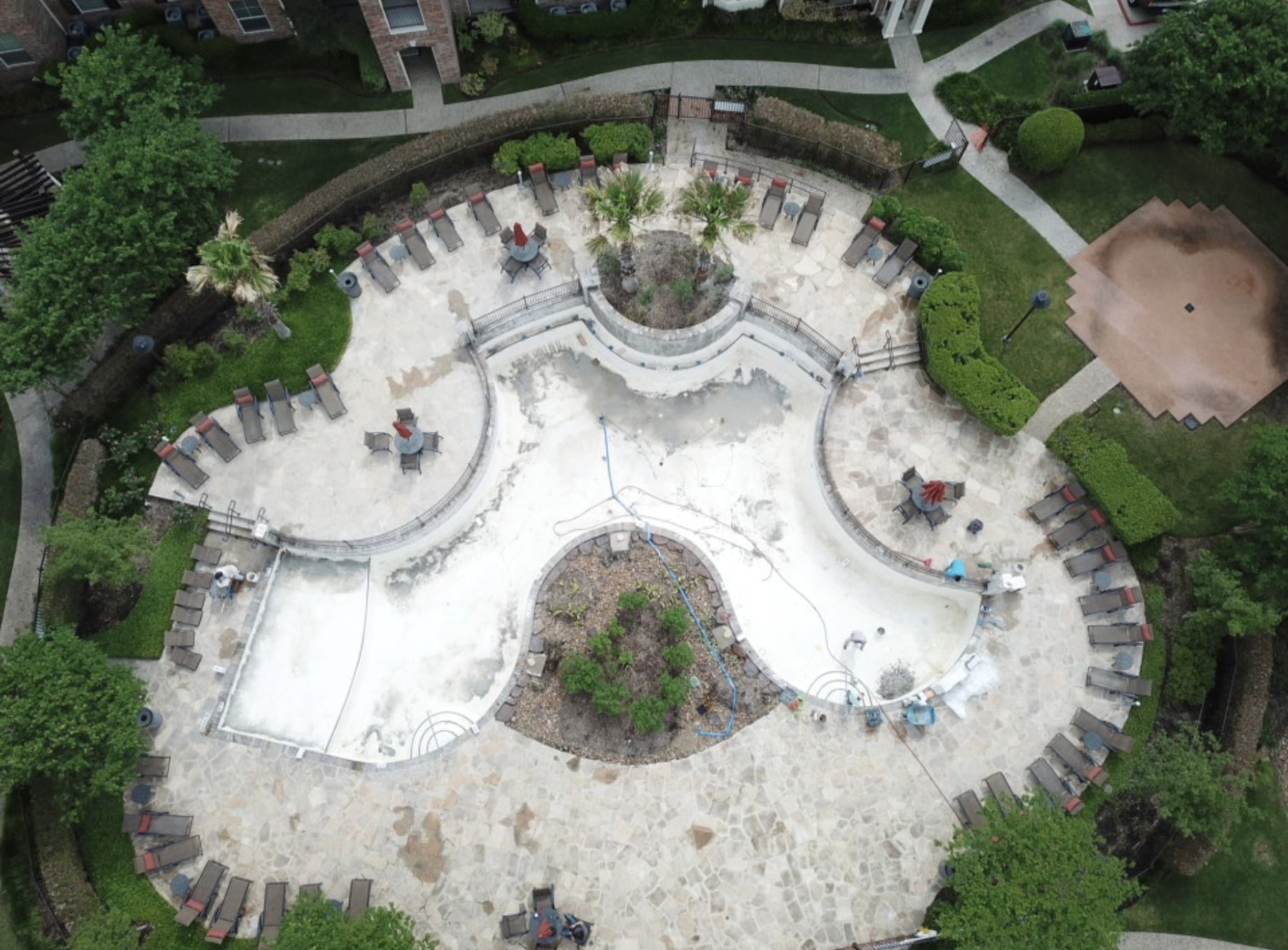
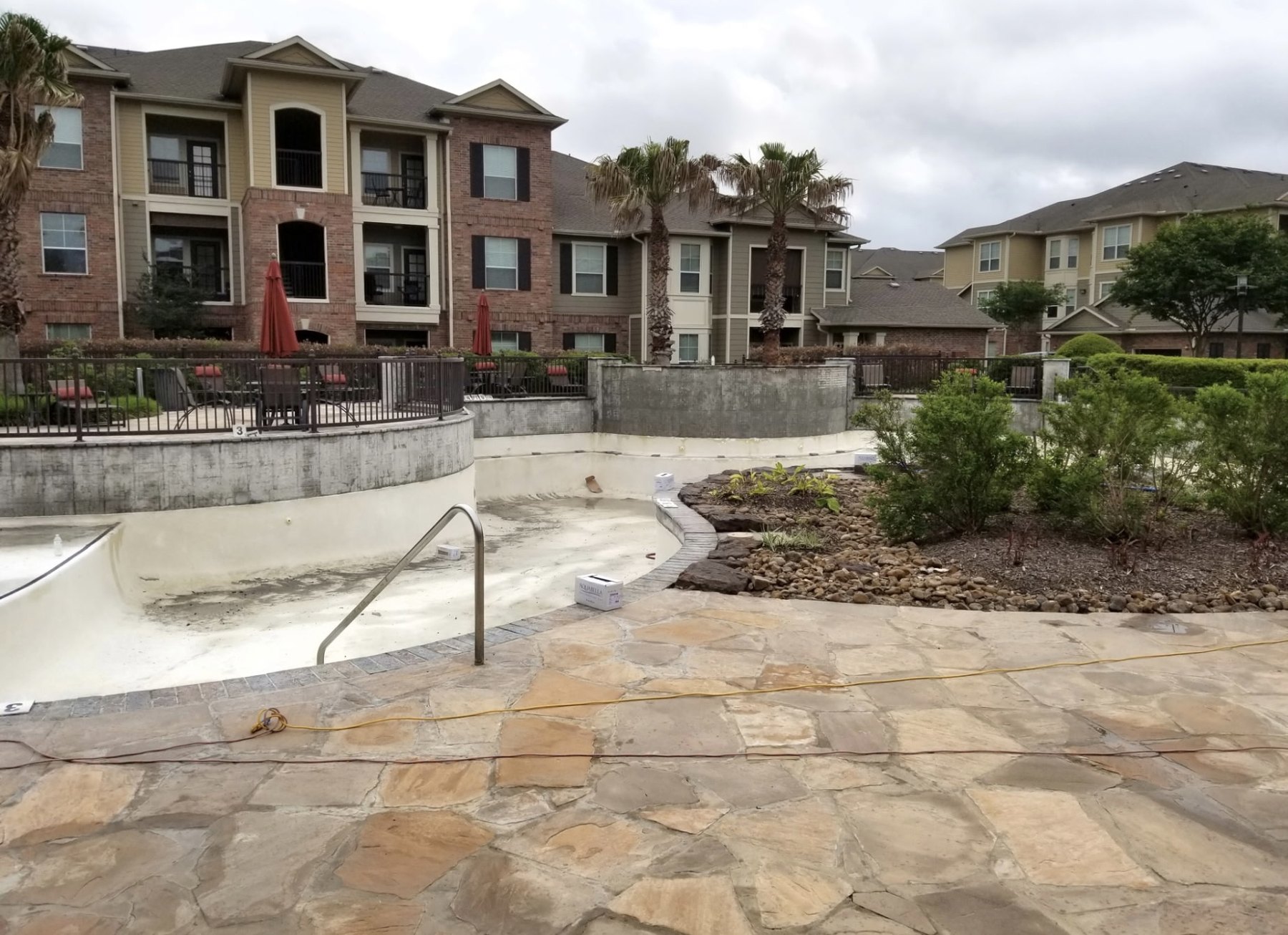
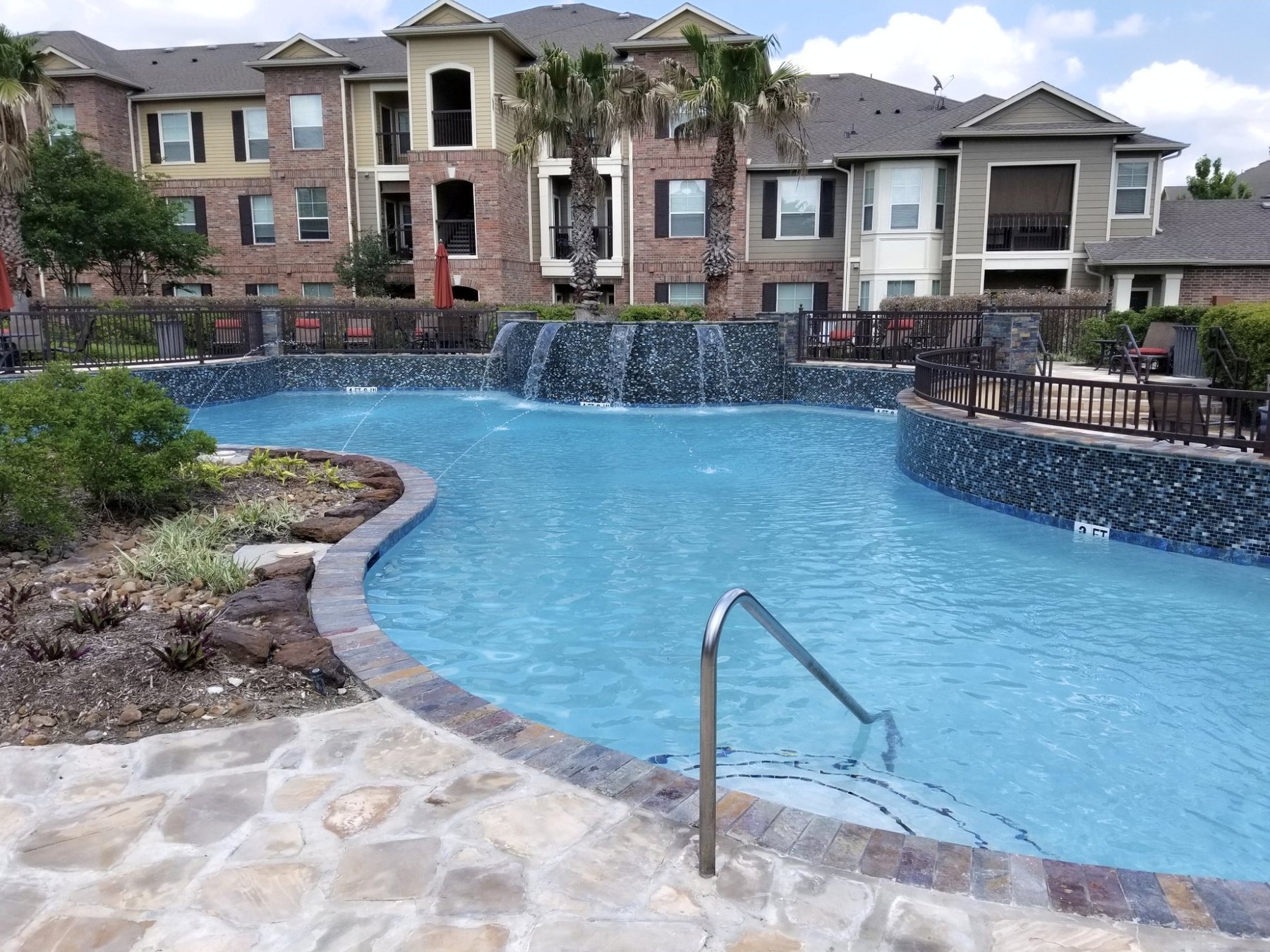
Commercial pools I work on are typically finished with marcite. In my experience, those projects often prioritize a straightforward, familiar finish and practical resurfacing costs over specialty residential aesthetics.
6. Access and job conditions
Access affects how crews, equipment and materials move in and out of a backyard. Every property is different, which is another reason a real on-site estimate is more useful than a price based only on a photograph or gallon count.
Why two resurfacing bids can be thousands of dollars apart
Sometimes one contractor is simply more expensive. But sometimes the two bids are not actually for the same job.
One bid may include removal of existing material while another assumes an overlay. One may include a particular branded finish or color while another uses a different product. Tile, startup, repairs, surface preparation and warranty terms may also be different.
Make sure you are comparing the exact same materials and the exact same scope. Ask what preparation is included, what finish and color you are getting, what happens if damaged or delaminated material is found, what the warranty covers and who is responsible for the work.
Is the cheapest pool finish always the best value?
No—but the most expensive finish is not automatically the best value either.
If you tell me you may sell the house in three years and your main goal is to make an aging pool presentable, I may give you different advice than I would give someone building their forever backyard. I install traditional plaster, quartz, pebble, polished aggregate, glass and EcoFinish, so the conversation does not have to start with one product being right for everybody.
“I will always talk a customer out of doing something that I think is a waste of money, and I’ll always give them my best professional advice on installing a product or a pool finish or anything, not just to make money, but for their best interest.”
How much should I budget before asking for an estimate?
If you are planning a DFW resurfacing project and do not yet know the condition of the pool, I would avoid building your entire budget around the lowest advertised number you find online. Choose the finish categories you want to consider, then leave room for preparation or repairs that may be necessary once the existing surface is evaluated.
For our 100-perimeter-foot example, the finish planning ranges run from roughly $7,500–$9,500 for white marcite to roughly $17,000–$21,000 for Hydrazzo/polished aggregate, with ecoFINISH at about $14,500–$17,500. Preparation can change the comparison substantially. The useful question is not just “Who gave me the lowest number?” It is “What exactly am I getting for that number?”
Frequently asked questions
How much does it cost to replaster a pool in Dallas–Fort Worth?
For Aqua Pool Finishes’ September 2026 hypothetical 100-perimeter-foot example, white marcite is about $7,500–$9,500 and quartz about $10,000–$12,500. Your actual price depends on size, existing condition, preparation and project scope.
How much does pebble pool resurfacing cost?
In the same APF example, mini pebble is roughly $12,500–$15,500. Aggregate selection, color, size and preparation can change the quote.
How much does EcoFinish cost?
For the same example pool, Aqua Pool Finishes’ current working estimate is roughly $14,500–$17,500. ecoFINISH is a different coating system from cementitious plaster, so comparing only the finish price without comparing the required preparation can be misleading. On a suitable resurfacing project, avoiding whole-pool plaster removal can materially change the total cost.
Do I have to replace my pool tile when I resurface?
No. Waterline tile is separate from the interior finish. Whether it should be replaced depends on its condition, appearance and the renovation you want.
Can you give an exact resurfacing price from a photo?
A photo can help start the conversation, but an on-site evaluation is the better basis for a firm scope because surface condition, access and hidden issues can affect the work.
Want a real price for your pool?
Aqua Pool Finishes resurfaces pools throughout Dallas–Fort Worth and East Texas and installs the major finish categories rather than steering every homeowner toward one material.
Request a Free EstimateIf your pool needs full old-finish removal before another cementitious finish, see the separate Hydro-Prep + cost-per-year comparison. It is intentionally kept separate so the normal resurfacing ranges on this page do not imply that every pool needs Hydro-Prep.
Related Ask Matt guides
Sources & methodology
Aqua Pool Finishes pricing: The dollar amounts in this guide are September 2026 working estimates supplied by Matt Phillips for a hypothetical 100-perimeter-foot pool. They are APF planning examples, not independent market averages or guaranteed quotes.
Independent market check: We reviewed current Dallas–Fort Worth resurfacing cost guides from multiple local providers and a Dallas-specific consumer cost guide. Published ranges vary materially by assumed pool size, finish and included work, but consistently identify finish type, pool size/geometry, preparation/condition, repairs and access as important cost drivers.
- Angi — Dallas Pool Resurfacing Cost (2026)
- Mirage Custom Pools — DFW Replastering Cost Guide (2026)
- Aqua MD — DFW Pool Resurfacing Guide
- Provision Outdoor Living — North Texas Pool Remodel Cost Guide (2026)
Independent sources are included for market context. Their pricing, lifespan claims and recommendations are not presented as Aqua Pool Finishes’ facts or endorsements.