I’ve worked in swimming pool construction since 2001 and have been personally involved with well over 500 pools. When somebody in Dallas–Fort Worth asks me what the best pool finish is, I can give them a much more direct answer than “it depends.” It does depend—but after I know what they care about, I usually have a clear recommendation.
For most homeowners who plan to keep and use their pool, ecoFINISH® aquaBRIGHT™ is my first choice. I install plaster, quartz, pebble, polished aggregate, glass finishes and ecoFINISH, and I don’t have a problem with any of them. They all have pros and cons. I just think ecoFINISH has fewer cons.
If you are selling soon and need the lowest-cost fresh finish, marcite can make sense. If you want an upgraded traditional cement finish, quartz can make sense. If you love the natural pebble look, get pebble. If you want a polished aggregate with abalone sparkle, Hydrazzo can give you something ecoFINISH cannot. But if your priorities are smoothness, durability, fewer finish-related maintenance headaches and long-term ownership, I’m going ecoFINISH.
Pool finish comparison for Dallas–Fort Worth
| Finish | Matt’s field lifespan* | Feel | Maintenance / aging notes | DFW hard-water considerations | Approx. 100-LF resurfacing cost** |
|---|---|---|---|---|---|
| White marcite | ~5–10 years | Smooth when new | Can discolor, etch and become rougher as it ages | Cement-based; scale and aggressive chemistry both matter | $7,500–$9,500 + hydro-prep when required |
| Quartz | ~10–15 years | Smooth to lightly textured | Generally longer-lasting than basic marcite in Matt’s experience, but still cementitious | Cement-based; water balance remains important | $10,000–$12,500 + hydro-prep when required |
| Mini pebble | ~15–20 years | Textured | Durable and attractive; can feel rougher with age | Durable aggregate, but still uses a cementitious matrix | $12,500–$15,500 + hydro-prep when required |
| JewelScapes / glass bead | ~15–20 years | Refined aggregate feel | Premium visual effect; chemistry still matters | Glass aggregate is set in a cementitious system | $15,500–$19,000 + hydro-prep when required |
| Hydrazzo / polished aggregate | ~15–20 years | Extremely smooth when polished | Beautiful polished finish; can lose some of that smooth feel as the cementitious surface ages | Still cement-based; hard-water and chemistry management matter | $17,000–$21,000 + hydro-prep when required |
| ecoFINISH aquaBRIGHT | Matt’s own installs date to 2019; he has inspected older installations by other contractors dating to 2008 that still looked good | Matt’s #1 choice for smoothness | Nonporous, pH-neutral polymer surface; Matt’s choice for fewer finish-related maintenance headaches | Matt’s preferred finish for North Texas conditions | $14,500–$17,500 |
*These lifespan ranges are Matt Phillips’ real-world field estimates, not manufacturer warranties or guaranteed service lives. **Aqua Pool Finishes planning ranges as of September 2026 for a hypothetical 100-linear-foot pool. Actual size, geometry, repairs, access, substrate condition, prep, tile and material selections change the price. Hydro-prep is only added when the job requires it.
Why pool finish choice matters so much in Dallas–Fort Worth
DFW pools deal with a combination that matters to the interior surface: mineral-containing water, long periods of intense summer heat and UV exposure, and occasional hard freezes. North Texas Municipal Water District classifies its treated water as moderately hard and says naturally occurring minerals such as calcium and magnesium can leave lime-scale deposits.
NTMWD says hard-water buildup in North Texas comes from naturally occurring minerals in regional water sources. The National Plasterers Council explains that cementitious pool finishes are affected by water chemistry: scale-forming conditions can deposit minerals on the surface, while aggressive water can etch or chemically deteriorate a cement-based finish.
I’ve repeatedly seen plaster and other cement-based finishes in DFW become rough, discolored or deteriorated sooner than homeowners expected. I’ve seen plaster get noticeably rough in four or five years in some pools, and I’ve seen older pools around ten years where the surface was extremely rough and deteriorated. That doesn’t mean every plaster pool does that on the same schedule. It’s what I’ve actually seen working on pools here. Compared with some of the other markets I have worked in, I see North Texas as a tougher environment for cement-based finishes, and I believe our mineral-heavy water is one reason. That is my field judgment, not a nationwide laboratory comparison.
The important point is not that “hard water automatically destroys plaster.” It is that a cementitious surface lives in direct contact with the pool water for years. If the water becomes scale-forming, minerals can build up on the finish. If chemistry swings too far in the aggressive direction, cementitious material can be etched or dissolved. That relationship is one reason I like a nonporous, pH-neutral polymer coating for North Texas.
What is the smoothest pool finish?
ecoFINISH is my first recommendation when somebody tells me they want the smoothest-feeling pool finish.
You can polish Hydrazzo or another polished-aggregate finish until it is about as smooth as you can make a cement-based surface. It can feel really good when it is new. But at the end of the day, it is still a cementitious surface. ecoFINISH is a polymer coating, and in my opinion you just can’t beat the smoothness no matter how hard you polish concrete.
The texture reminds me of an orange peel. There is a subtle texture there, but it feels smooth under your feet. That matters if you have kids who roughhouse in the pool—or you’re the dad throwing your kids around. They are pushing off the floor, landing on steps and dragging their feet across the surface. A rough pool finish can tear their feet up. If the family actually plays in the pool, smoothness is not just a luxury.
Hydrazzo has one aesthetic advantage ecoFINISH does not: if you specifically want a polished surface with abalone sparkle, Hydrazzo can give you that look. Abalone is not added to ecoFINISH. If the sparkle is what you love, I understand choosing Hydrazzo. If you do not care about that sparkle and smoothness is the priority, I would choose ecoFINISH.
How long does each pool finish really last in Matt’s experience?
Homeowners ask this constantly, and I think contractors should answer it instead of hiding behind vague language. These are field estimates, not warranties. Installation quality, chemistry, use and the pool itself can move the number in either direction.
- White marcite: roughly 5–10 years in my field experience.
- Quartz: roughly 10–15 years.
- Mini pebble: roughly 15–20 years.
- JewelScapes / glass bead: roughly 15–20 years.
- Hydrazzo / polished aggregate: roughly 15–20 years.
- ecoFINISH: I started applying it myself in 2019, so I will not pretend I have 20 years of history with my own installations. I have, however, personally looked at ecoFINISH pools installed by other contractors as far back as 2008 that still looked good when I inspected them.
“I’ve only been applying ecoFINISH since 2019, so I only know what I’ve personally put out there for that long. But I have looked at older ecoFINISH pools other contractors did, including pools that went back to 2008, that still looked good.”
Traditional plaster / marcite: when Matt recommends it
Marcite is the economical starting point. If you tell me, “I need to make the pool look good because I’m selling the house and I don’t have a lot of money to throw at it,” a fresh plaster finish can absolutely get the job done. I’m not going to talk you into a premium finish just because I can.
The tradeoff is that it is still a cement-based finish. If you are staying in the house for years, the lower price today has to be weighed against the possibility that you will resurface the pool again later.
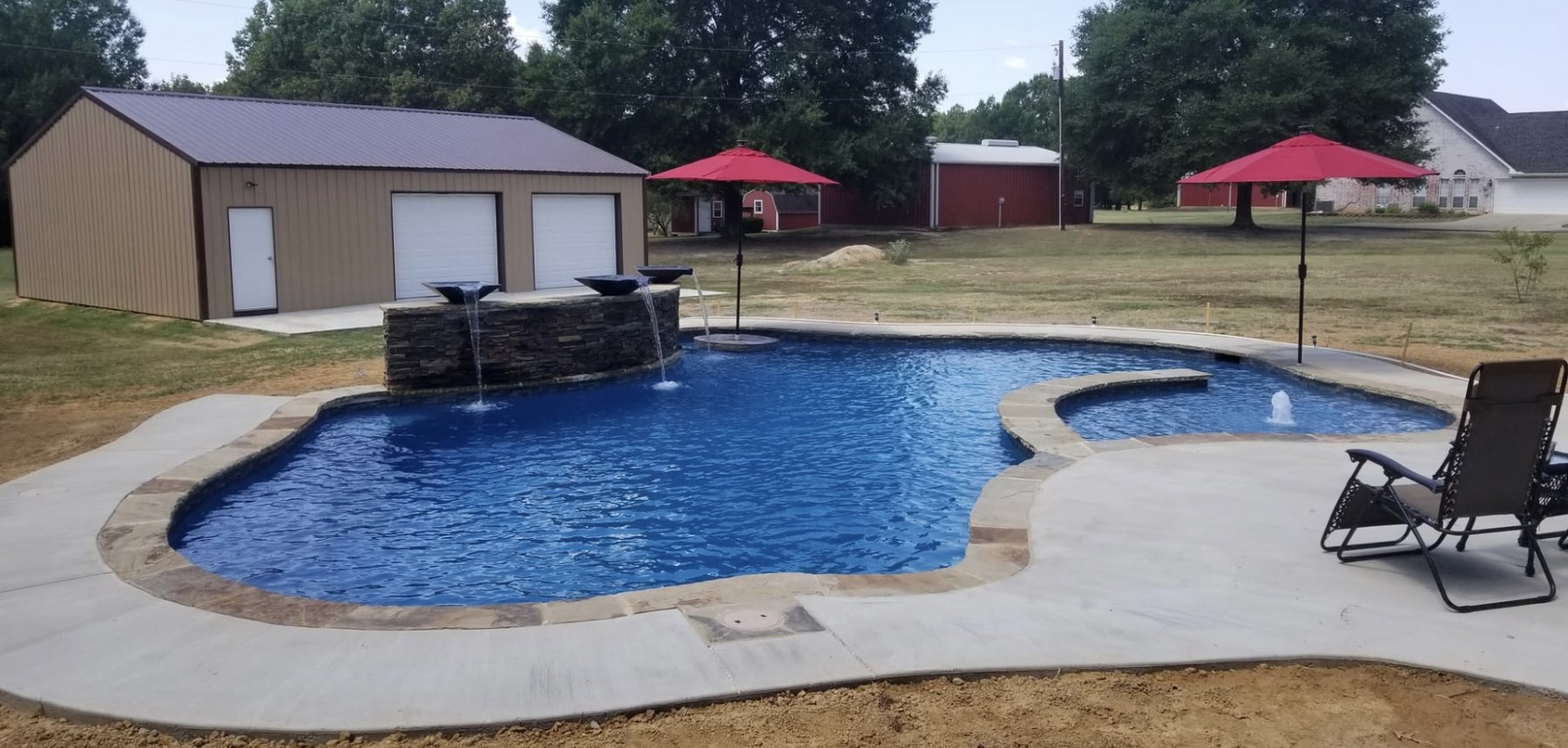
Quartz: a step up when you still want cementitious
If you are going to be at the house for a while, want something that generally looks more upgraded and lasts longer than basic marcite, but you still want to stay with a traditional cement-based finish, I would look at quartz.
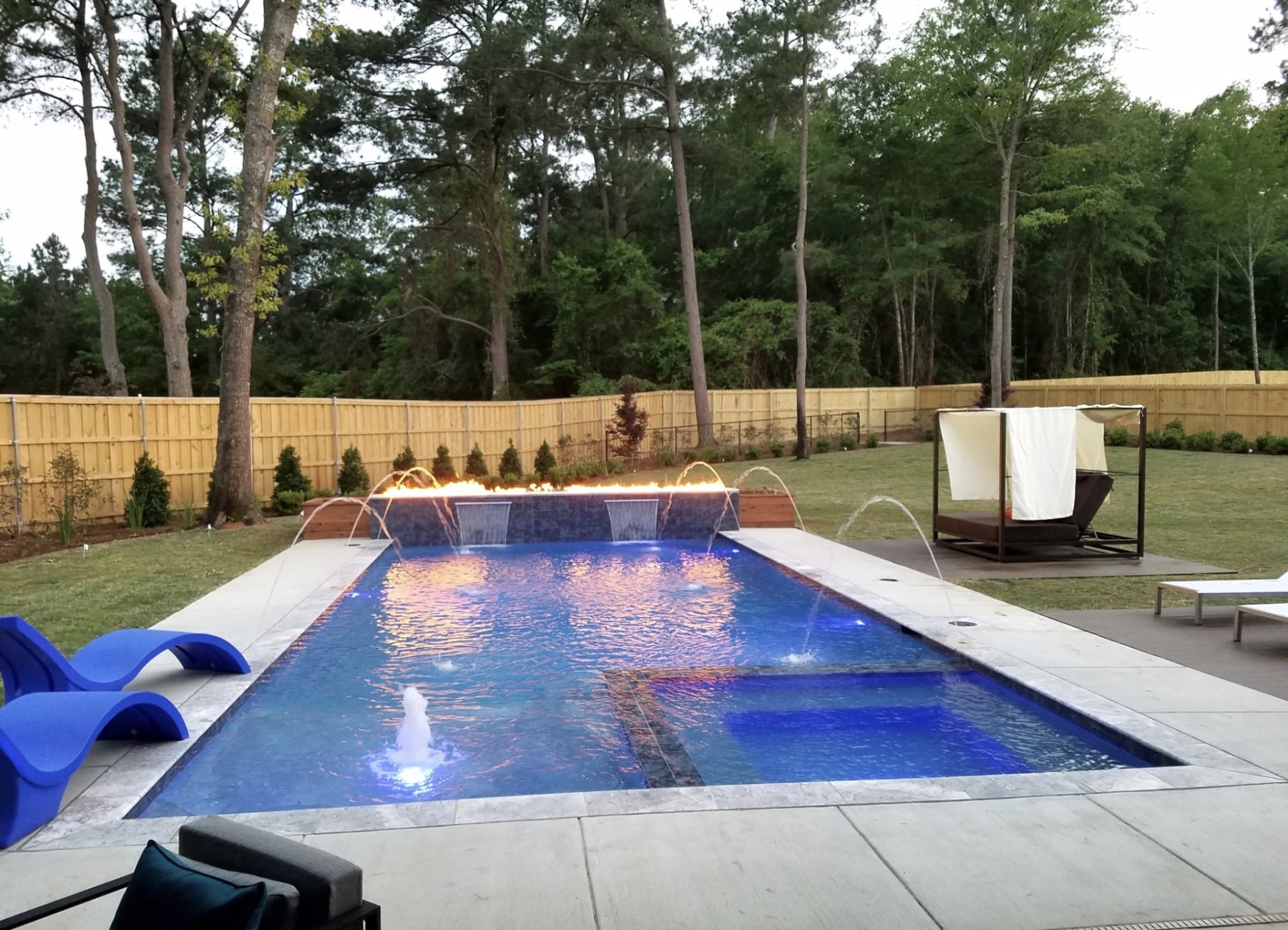
Pebble: choose it because you love the look
Pebble has grown in popularity for good reason: it can be very durable and the natural aggregate look is beautiful. The tradeoff is texture. It is intentionally more textured than the finishes I would call smooth, and in my experience it can feel rougher as it ages.
If you love the pebble look, that is a perfectly good reason to choose pebble. If you are choosing it mainly because durability is your number-one concern and you do not specifically care about the pebble appearance, I would steer you toward ecoFINISH instead because I think you can get comparable or better long-term durability while also getting the smooth feel I prefer.
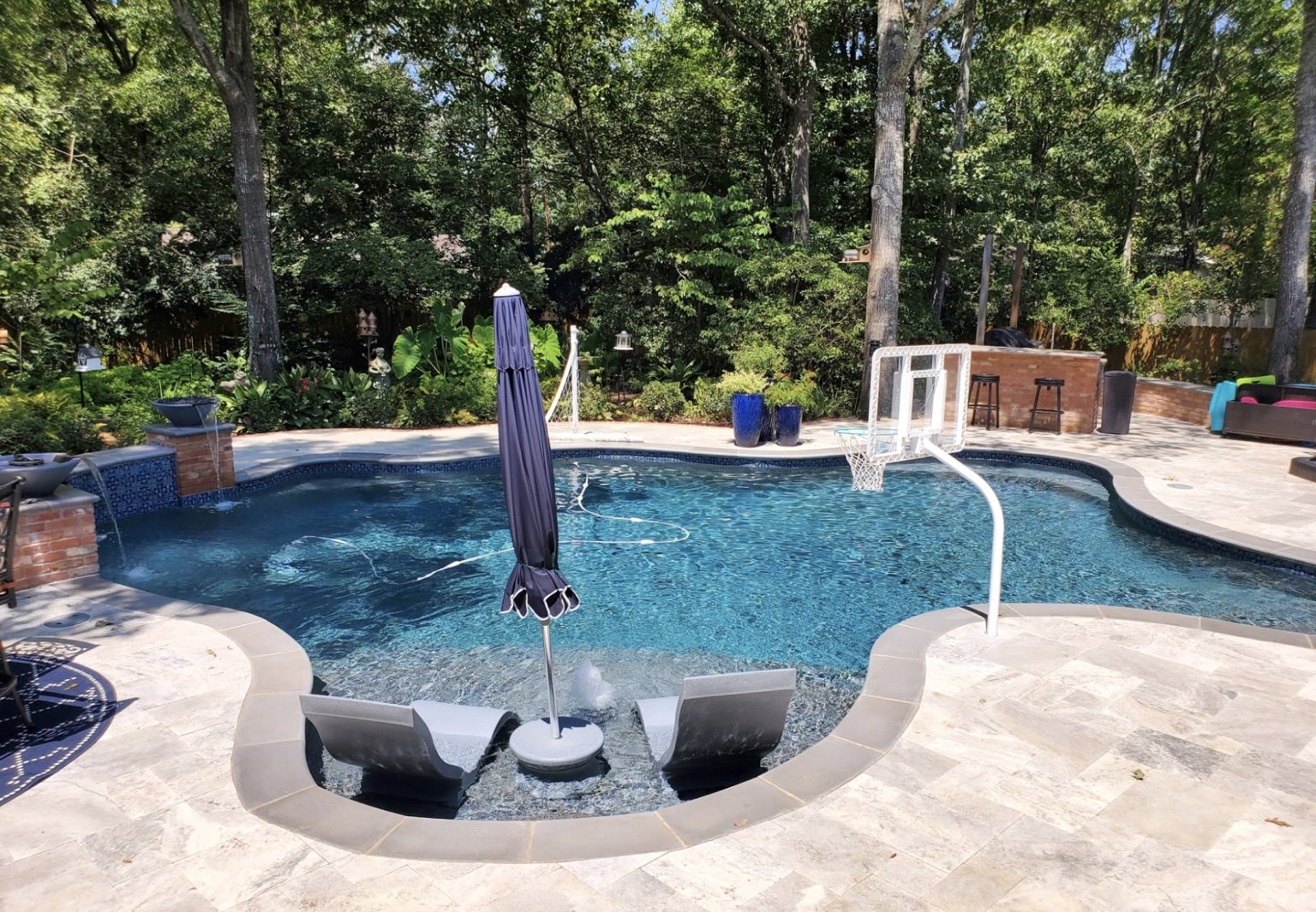
Hydrazzo and polished aggregate: beautiful and very smooth when new
Hydrazzo and other polished aggregate finishes can be gorgeous. You can polish that cementitious surface extremely smooth, and the option for abalone sparkle can create a look ecoFINISH cannot duplicate. If that appearance is your priority, I understand the choice.
My reservation is long-term texture. It is still cement-based. Especially in a hard-water market like DFW, I have seen cementitious surfaces become rougher over time. That is why I would not pick Hydrazzo over ecoFINISH just for smoothness alone.
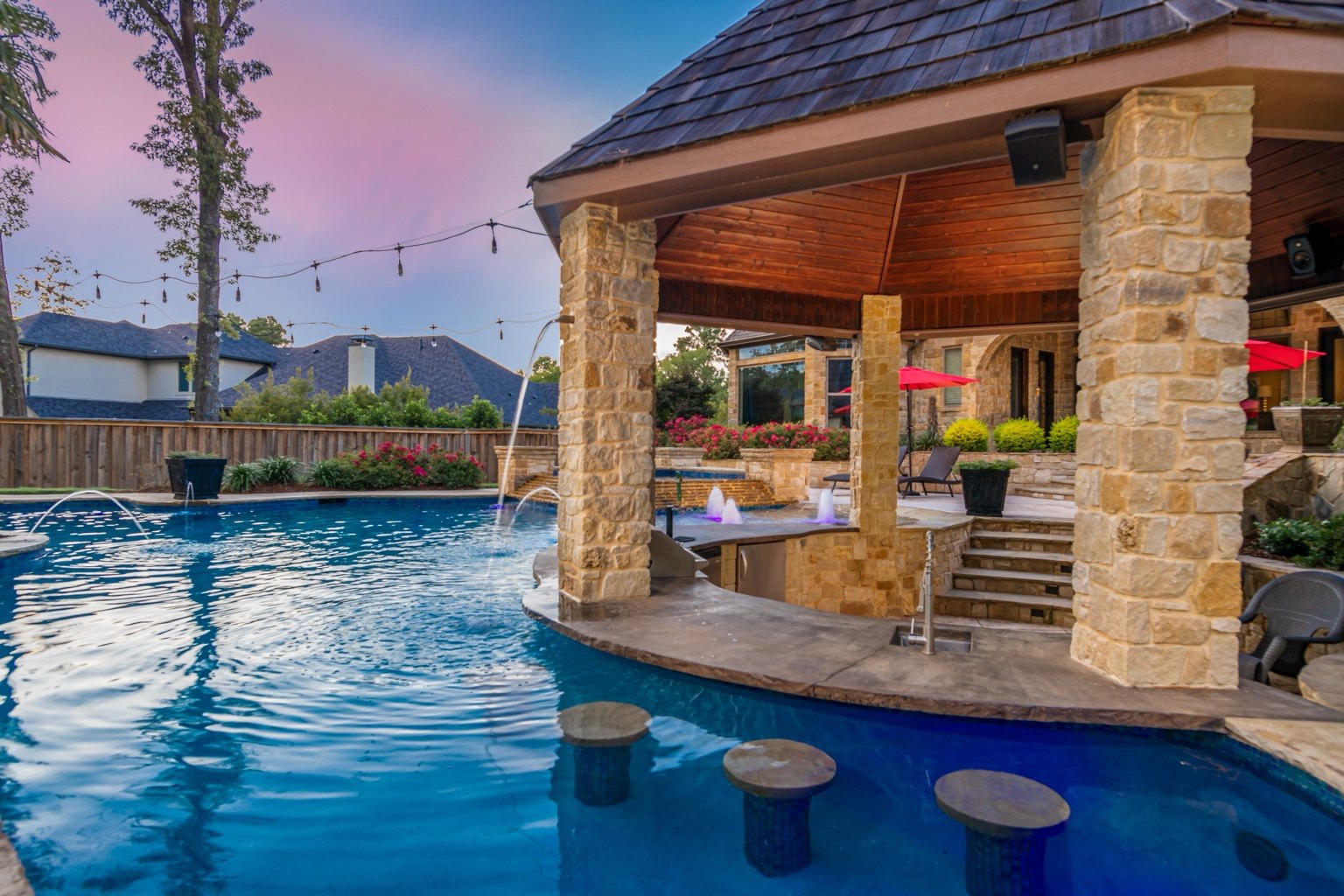
JewelScapes and glass-bead finishes
Glass-bead finishes such as JewelScapes are a premium option with a distinctive reflective appearance. In my experience, these can be very durable finishes—roughly 15–20 years is a reasonable field estimate—but they still use a cementitious matrix, so proper startup and water chemistry remain important.
What about glass tile?
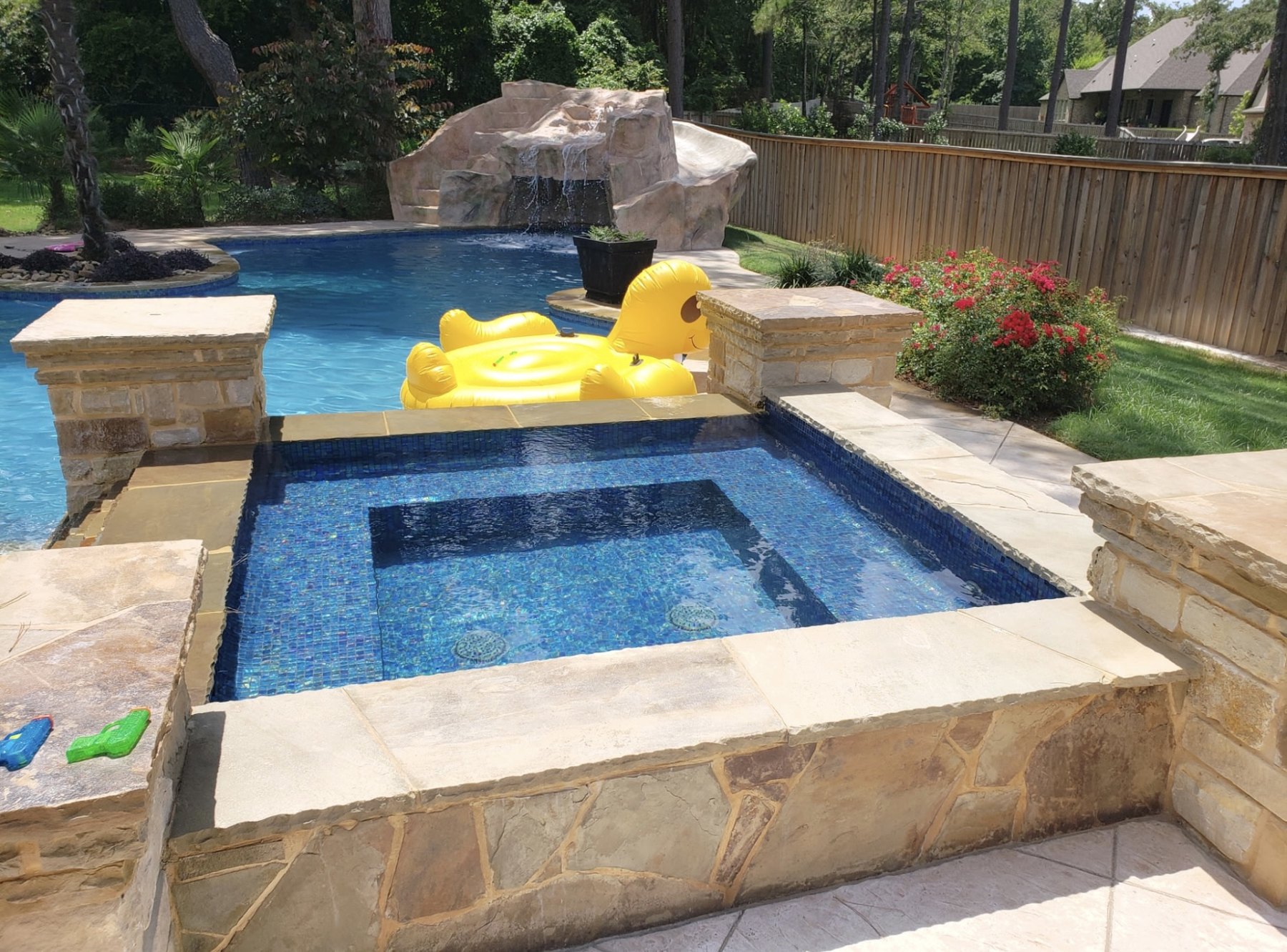
Glass tile can create a smooth, highly reflective premium surface. Matt has installed glass tile in spa interiors and likes the finished look; full all-tile pool interiors are a different scope from the finish systems compared above.
Why ecoFINISH is especially attractive on a pool being resurfaced
One of the biggest advantages of ecoFINISH is easy to miss if you only compare the price of the finish material.
On a pool that has original plaster that is discolored, stained or rough, ecoFINISH can often be installed over the existing plaster after the substrate is professionally evaluated and properly prepared. That does not mean coating over bad plaster. Our crew goes through the pool and finds hollow, loose, cracked, delaminated or otherwise unsound areas, removes or repairs what needs to be repaired, patches and smooths the surface, prepares the sound remaining substrate and then applies the ecoFINISH system.
ecoFINISH installation guidance requires a suitable substrate and does not treat the coating as a fix for failing plaster. Unsound or delaminated material still has to be addressed. The point is that a suitable resurfacing project does not necessarily require removing every square foot of sound existing plaster before the polymer coating is applied.
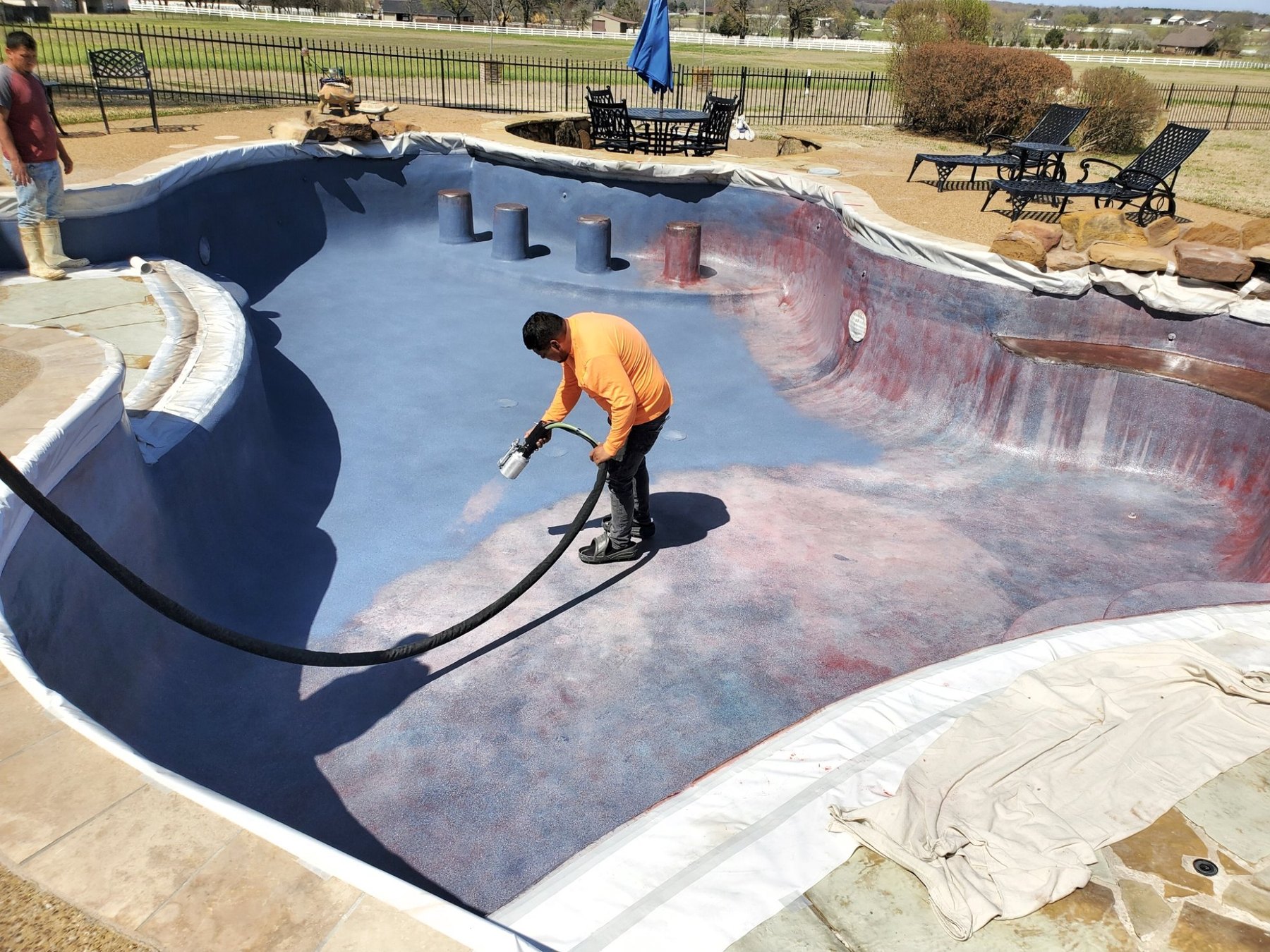
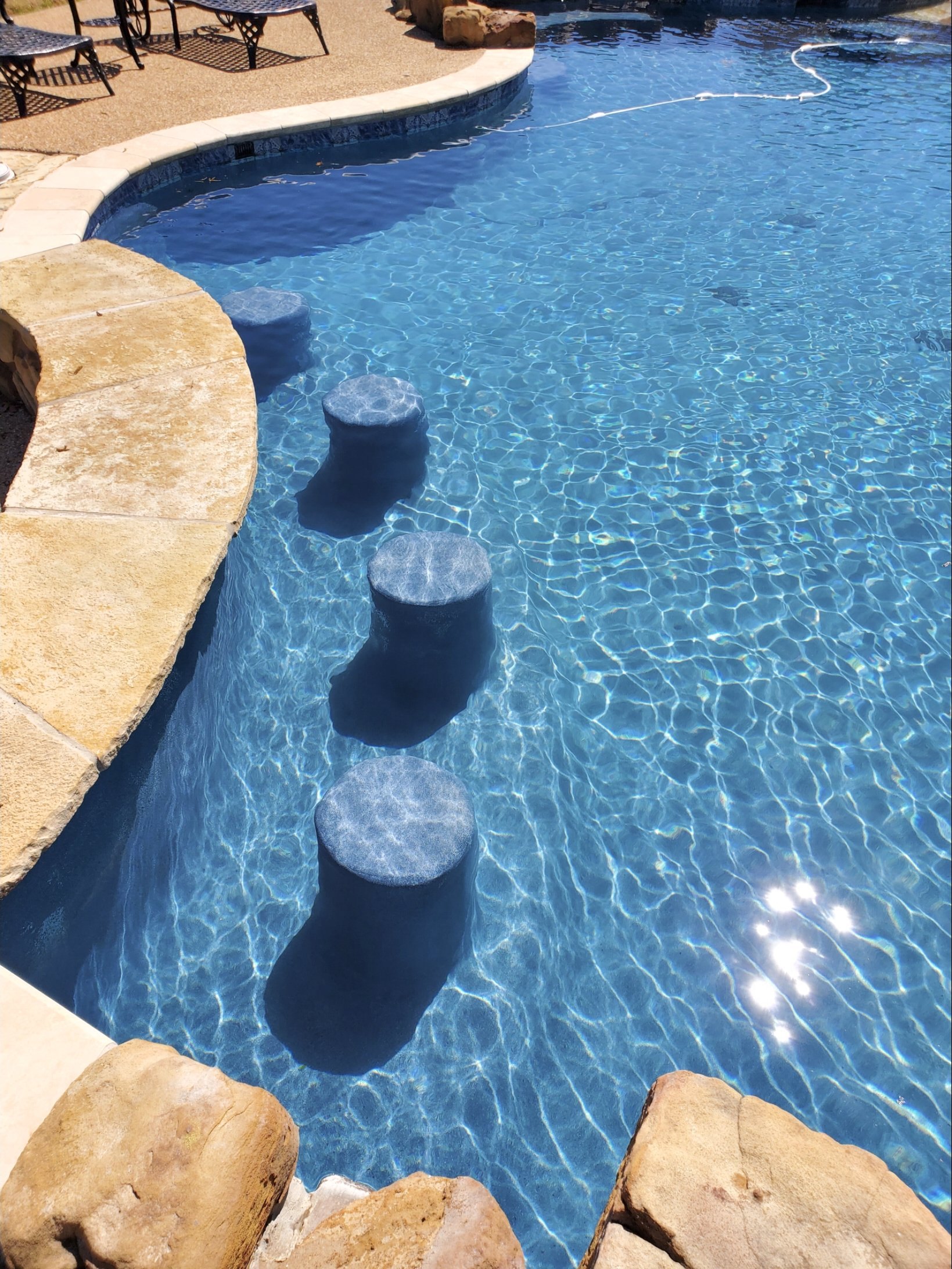
That can matter the very first time you refinish the pool. If you put another cementitious finish over the original plaster, that new finish will eventually age too. If the pool is resurfaced again later, multiple old layers can create additional prep and delamination concerns. Matt often prefers removing old cementitious layers before installing another cementitious finish when conditions call for it.
If you choose ecoFINISH the first time the original plaster needs resurfacing, I think there is a real possibility you may not need to refinish that interior again during your ownership—and potentially much longer. I do not present that as a guarantee. My own installations only go back to 2019. It is one of the reasons I would rather put the polymer finish on a suitable pool now than add another cementitious layer simply because it is cheaper today.
Can ecoFINISH actually cost less than another premium finish?
Sometimes, yes. ecoFINISH is a premium finish, but the total project price includes preparation. If a cementitious refinish would require whole-pool hydro-prep or hydroblasting and an ecoFINISH project can instead retain the sound plaster after the necessary repairs and preparation, avoiding complete removal can potentially save thousands of dollars.
On an older pool that has already been plastered before, this is where ecoFINISH can really start to shine. We still fix everything that is hollow, cracked or unsound. But if the remaining plaster is sound, we do not necessarily have to hydroblast the entire pool just to put another finish on it. You can potentially avoid thousands in removal work and end up with the finish I would rather have in the first place.
That is why a simple “finish A costs more per square foot than finish B” comparison can be misleading. The total scope matters.
There can also be a time advantage. When whole-pool hydro-prep is not needed and the repair/prep scope is straightforward, ecoFINISH can eliminate a major removal step. The coating is thermally applied and manufacturer materials describe it as instantly cured, so it does not require the extended plaster curing/startup sequence. On the right existing pool, that can make ecoFINISH one of the quickest ways to get a resurfaced pool back to refill. Actual project time still depends on repairs and job conditions.
Why Matt likes ecoFINISH for fewer finish-related maintenance headaches
ecoFINISH is not a maintenance-free pool. You still need proper sanitizer, circulation and water balance, and tile, grout, equipment, metals and other components still live in the same pool water.
ecoFINISH describes aquaBRIGHT as a nonporous, pH-neutral polymer coating that is chemical resistant, stain resistant, UV/fade resistant and designed for easier maintenance. Because the coating itself is pH neutral, it does not create the same startup chemistry demands as a new cementitious plaster surface.
If a homeowner tells me, “I want the fewest finish-related maintenance headaches I can reasonably get,” ecoFINISH is where I point them. I have never personally encountered calcium-scale buildup on an ecoFINISH surface. That is my field experience, not a claim that badly balanced pool water cannot produce mineral deposits anywhere in the pool.
Does ecoFINISH have flexibility that cement-based finishes do not?
Yes, but that needs to be understood correctly. ecoFINISH is a flexible polymer coating; plaster, quartz, pebble and polished aggregate are rigid cementitious finishes. That flexibility can help the coating tolerate minor substrate movement differently from a rigid cement surface.
It does not make a structurally cracked pool “fixed,” and it does not make the pool shell immune to movement. Structural cracks still have to be diagnosed and repaired appropriately. The coating also is not a substitute for a watertight substrate.
How does the Texas summer sun affect pool finishes?
DFW summer conditions matter in two different ways: during installation and over the life of the finish.
The National Plasterers Council says hot temperatures, low humidity and wind can shorten set time and increase surface drying during cementitious plaster installation, raising risks such as abnormal shrinkage cracking, cold joints and uneven coloration if conditions are not managed properly.
UV exposure is the other question. ecoFINISH publishes accelerated QUV testing of aquaBRIGHT in which a sample exposed for 3,000 hours showed no visually detectable color change or gloss loss. The manufacturer correctly notes that those laboratory hours cannot be converted directly into a specific number of real-world years.
Texas pools can sit under extremely strong summer sun for months at a time. I care about UV resistance here because color stability is not an abstract feature—it is something the finish is exposed to every day.
What about Texas hard freezes?
The February 2021 Texas freeze is a good reminder that DFW pools have to deal with both extremes. Water expands by about 9% when it freezes, and freeze-thaw conditions can damage tile, stone, coping, concrete and cementitious materials—especially around the waterline transition zone.
Most of what I saw was not the interior finish being the first thing to fail. Water beneath coping could freeze and expand and pop coping loose. We also saw waterline tile break. As far as the ecoFINISH coating itself, I do not see freezing as the main concern. If a pool freezes hard enough, I am more concerned about what is happening to the tile, coping, structure and substrate underneath it. More than likely I would not expect the ecoFINISH itself to be the problem.
That is a field observation, not a claim that ecoFINISH is freeze-proof.
Can ecoFINISH have problems?
Absolutely. I do not believe in pretending any product is perfect just because I sell it.
We had an ecoFINISH installation develop bubbling on part of a wall after installation. My diagnosis was that the epoxy in that area had progressed too far before the coating was applied. Sun, shade and temperature affected the working window, so we changed our sequence—sunny areas first and shaded areas later. We removed the affected bubbles, ground and prepared the area again and recoated the wall. We did not have to redo the entire pool.
That reinforced something I have believed for a long time: the finish matters, but the person installing it matters just as much.
So which pool finish should you choose?
- Need the lowest-cost fresh finish, especially before selling? Marcite may be enough.
- Want a traditional cement-based finish that is a step up from marcite? Look at quartz.
- Love the natural pebble look? Choose pebble because you love that appearance.
- Want a very smooth polished cementitious finish with abalone sparkle? Hydrazzo is worth considering.
- Want premium glass-bead appearance? Consider JewelScapes.
- Want Matt’s combination of smoothness, durability, nonporosity, flexibility and fewer finish-related maintenance headaches? ecoFINISH is his first choice.
“I really don’t have a problem with any of these finishes. They all have pros and cons. I just think ecoFINISH has fewer cons.”
If it were my own pool in Dallas–Fort Worth, I would choose ecoFINISH. If you specifically want something another finish does better—like Hydrazzo with abalone sparkle or the natural look of pebble—I’ll tell you that too. I will always talk a customer out of doing something I think is a waste of money and give them my best professional advice based on what actually makes sense for their pool.
Frequently asked questions
What is the best pool finish for Dallas–Fort Worth?
Matt Phillips generally recommends ecoFINISH for a DFW homeowner who prioritizes long-term ownership, smoothness, durability and fewer finish-related maintenance headaches. He still recommends marcite, quartz, pebble, Hydrazzo or glass when the customer’s budget or preferred appearance makes one of those a better fit.
What is the best pool finish for DFW hard water?
Matt generally favors ecoFINISH because it is a nonporous, pH-neutral polymer coating rather than a cementitious surface. North Texas water can contain naturally occurring hardness minerals, and Matt has repeatedly seen scale, roughness and deterioration issues involving cement-based finishes in local pools. Proper chemistry is still required with every finish.
What is the smoothest pool finish?
Matt’s first choice for smoothness is ecoFINISH. Polished aggregate such as Hydrazzo can also be extremely smooth when new, but Matt prefers the feel of the polymer coating and believes it maintains that smooth character better over time.
Is ecoFINISH better than pebble?
If you love pebble’s natural aggregate appearance, pebble may be the better choice for you. If durability is the main reason you are considering pebble and you also value a smoother surface, Matt generally recommends ecoFINISH.
Is ecoFINISH better than plaster or quartz?
For long-term ownership, Matt generally prefers ecoFINISH. Marcite and quartz can cost less initially and can be entirely appropriate when budget or ownership horizon matters more than getting Matt’s preferred long-term surface.
Can ecoFINISH go over my original plaster?
Often, yes, when the substrate is suitable. Aqua Pool Finishes identifies and repairs hollow, loose, cracked or otherwise unsound areas, properly prepares the remaining sound plaster and then applies the ecoFINISH system. It is not a method for hiding bad plaster.
Does ecoFINISH eliminate hydroblasting?
Not universally, but it can eliminate the need for whole-pool plaster removal on a suitable project. That can materially change the total cost compared with a cementitious refinish that requires complete hydro-prep.
Can Texas heat or freezes damage pool finishes?
Yes. Hot-weather conditions can complicate cementitious finish installation, and freeze-thaw cycles can damage tile, coping, concrete and cementitious materials. Matt does not consider the ecoFINISH coating itself the primary freeze concern, but he does not call any finish freeze-proof.
Related Ask Matt guides
Sources & further reading
We separate Matt’s firsthand field experience from published technical information. Technical background for this guide was checked against primary sources including:
- North Texas Municipal Water District — Water Quality / North Texas water hardness
- National Plasterers Council — cementitious pool-finish technical resources
- National Plasterers Council — Hot Weather Considerations
- National Plasterers Council — Understanding Freeze-Thaw Damage
- NPT — Plaster, quartz, pebble, polished aggregate and glass-bead finish collections
- ecoFINISH — aquaBRIGHT product information
- ecoFINISH — accelerated UV/QUV testing information
Not sure which finish makes sense for your DFW pool?
Aqua Pool Finishes installs traditional plaster, quartz, pebble, polished aggregate, JewelScapes/glass and ecoFINISH® aquaBRIGHT™ across Dallas–Fort Worth and East Texas. We’ll look at your existing finish, substrate, budget, priorities and ownership plans before recommending a surface.
Request a Pool Finish Consultation More Ask Matt Answers